



In the functional food and pharmaceutical industries, the two most common dosage forms today are hard capsules and tablets. Both offer users ease of use, convenience, precise dose control, and good shelf life.
However, each form has its own characteristics, advantages, disadvantages, and specific applications, which directly impact absorption efficiency and production costs.
Join Life Gift Vietnam as we explore hard capsules and tablets in detail to help you choose the most suitable dosage form for your product.
1. What are hard capsules?
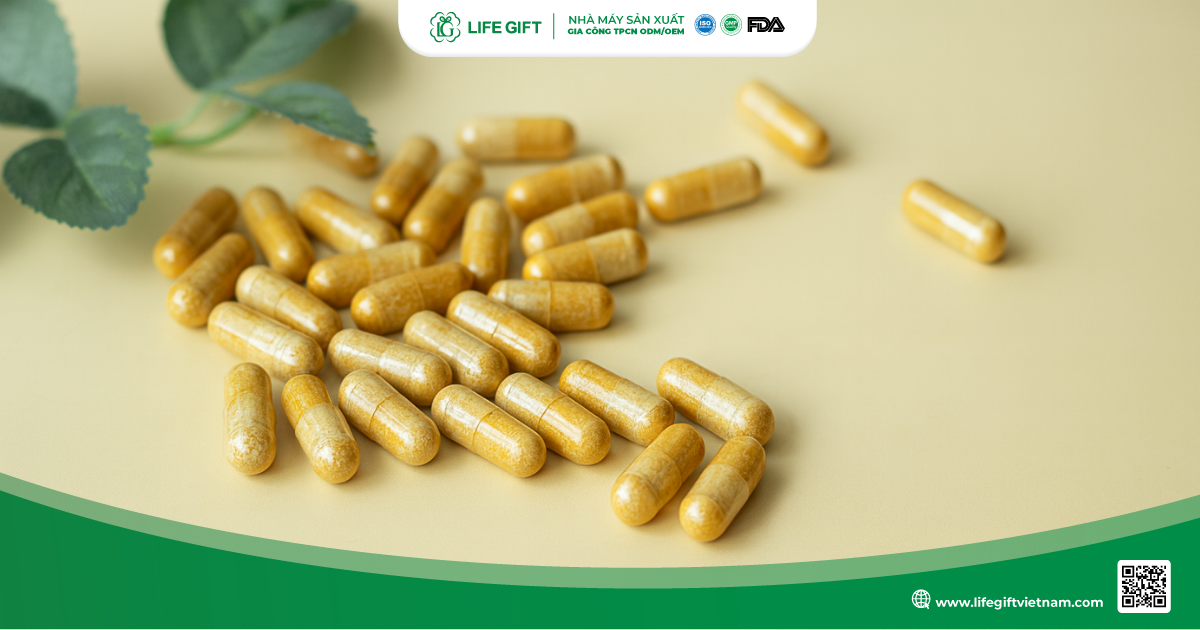
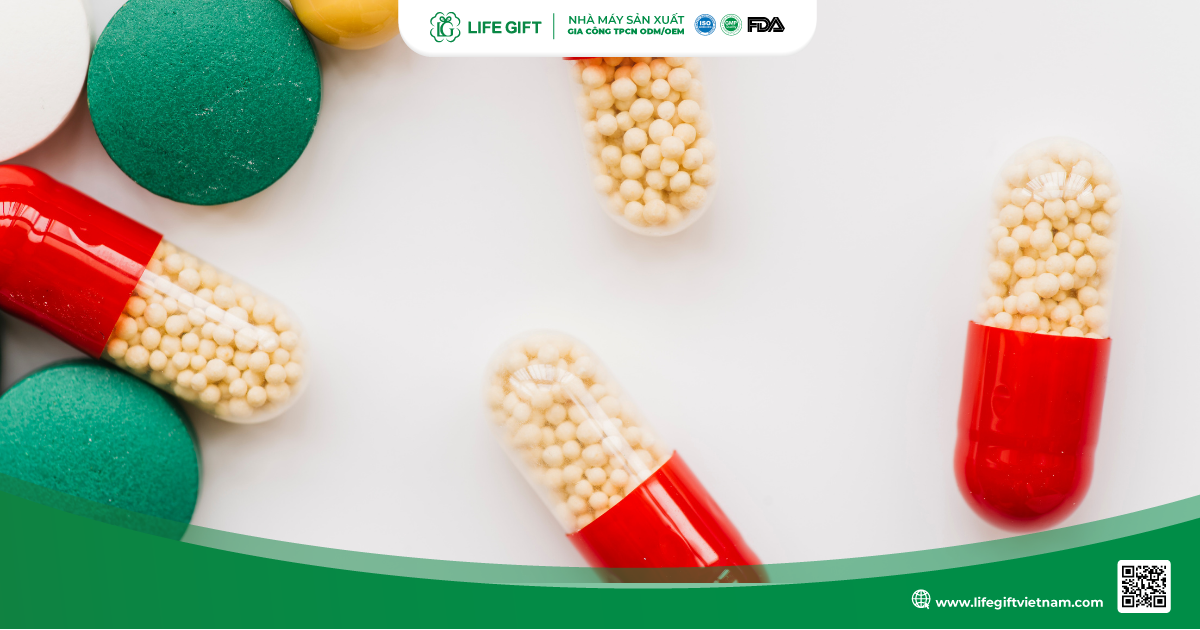
Hard capsules are a dosage form containing powder, granules, or dry particles that are filled into a two-piece capsule shell (cap and body).
The capsule shell is typically made from gelatin (animal-derived) or HPMC (plant-derived), which helps protect the active ingredient from moisture and oxidation.
Advantages of hard capsules
Masks odors, easy to drink—especially suitable for herbal ingredients, algae, and extracts with strong odors.
It dissolves quickly, allowing the active ingredient to be absorbed rapidly in the stomach.
Accurate, appropriate dosing for products with low to moderate active ingredient concentrations.
Reduces the risk of cross-contamination through a closed-loop production process.
Disadvantages
Not suitable for moist, oily, or liquid ingredients.
Sensitive to high humidity and temperature; store in a dry place.
Limited dosage (usually ≤ 600 mg per tablet).
2. What are tablets?
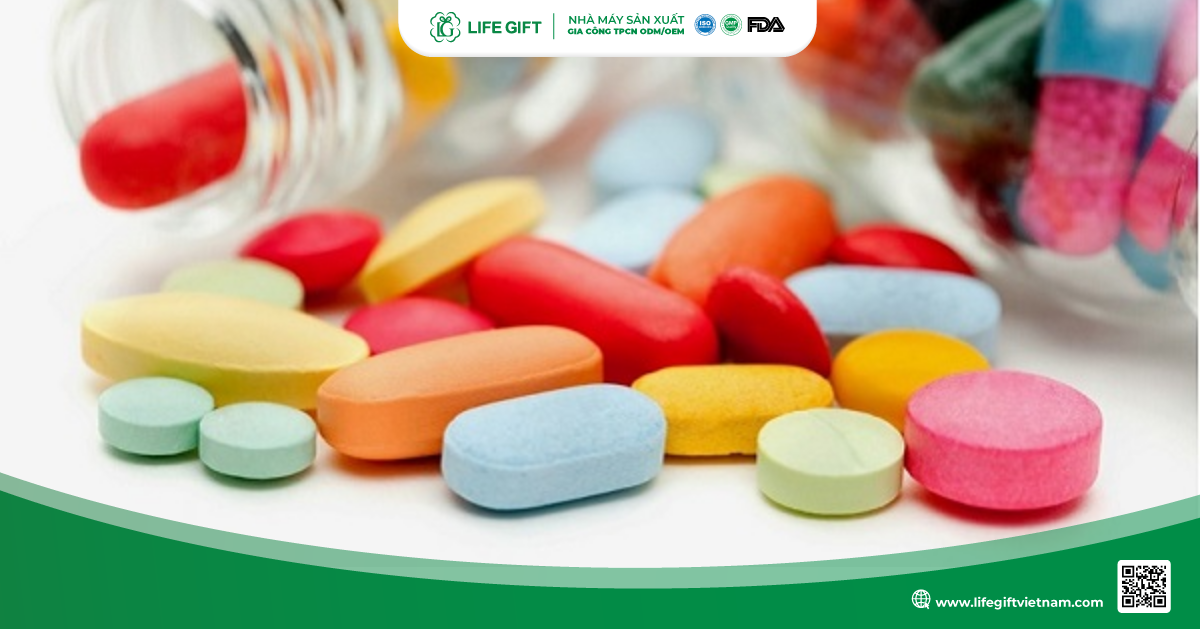
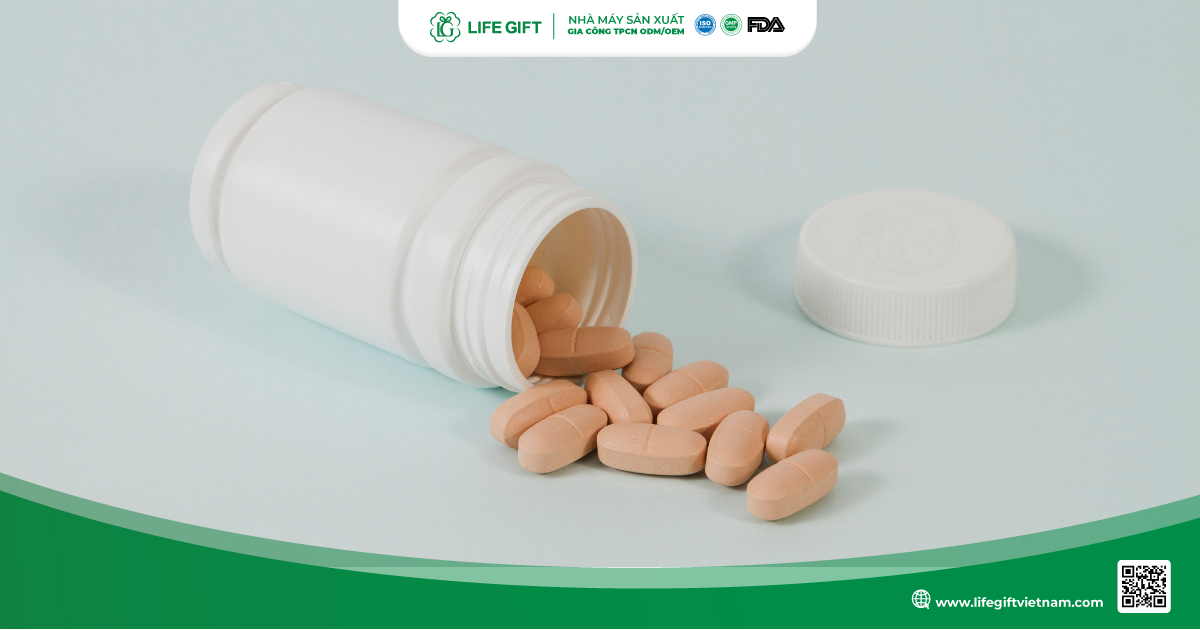
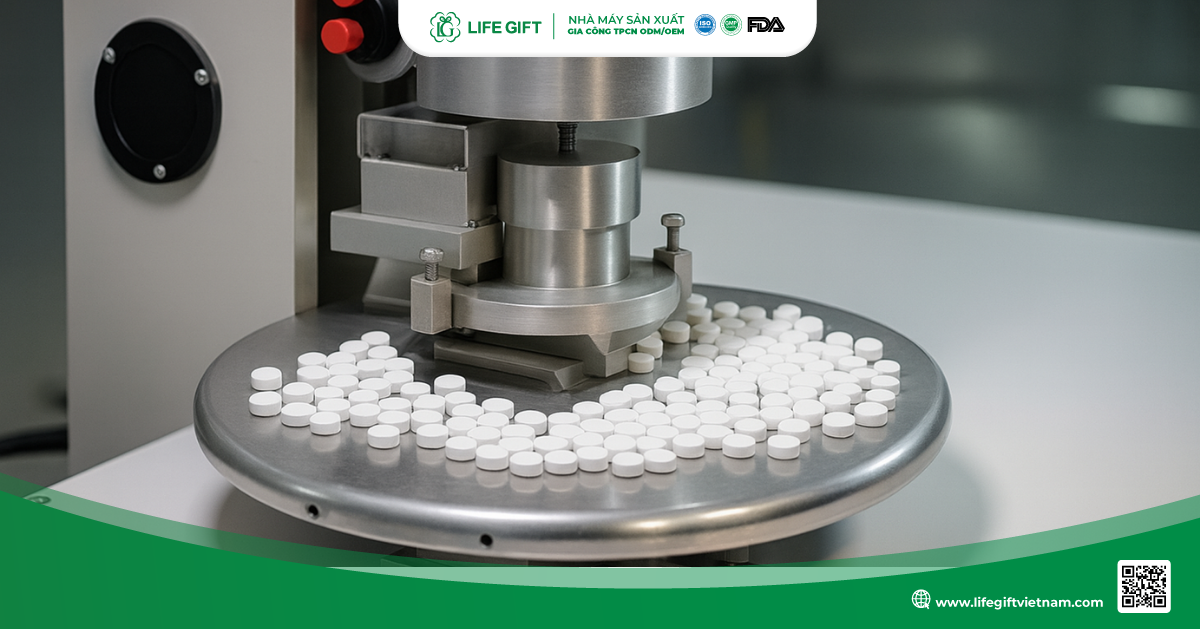
A tablet is a product formed by compressing a mixture of active ingredients and excipients under high pressure. It is the oldest and most common dosage form in the pharmaceutical and dietary supplement industries.
Advantages of tablets
Low production costs, suitable for large-scale operations.
More environmentally friendly because it does not require a separate wrapper.
Easy to store; not easily affected by humidity.
You can coat the film or create a slow-release layer to control the rate of absorption.
Disadvantages
They are harder to swallow than hard capsules, especially for the elderly and young children.
It is difficult to mask a bitter or unpleasant taste without a coating.
Some active ingredients are prone to degradation during compression, so the formulation must be adjusted accordingly.
Related Posts