



Vietnam is a country with abundant medicinal resources and a tradition of traditional medicine that has been shaped and developed over many generations. Folk remedies and the traditional use of medicinal herbs not only hold cultural significance but also serve as a valuable reference for current research and the development of health care products. This tradition also provides a foundation for researching formulations and manufacturing functional foods derived from medicinal herbs.
With advances in pharmaceutical technology, many herbal ingredients are now available in the form of extracts or freeze-dried powders that meet appropriate quality standards. These forms of raw materials make it easier to conduct research and develop functional food formulations, while also expanding the possibilities for developing product forms such as powders, granules, hard capsules, and tablets.
Combining traditional medical knowledge with modern formulation research and manufacturing technology helps turn product ideas based on medicinal herbs into actual products. As a result, companies can develop functional food products that align with market demand and business objectives.
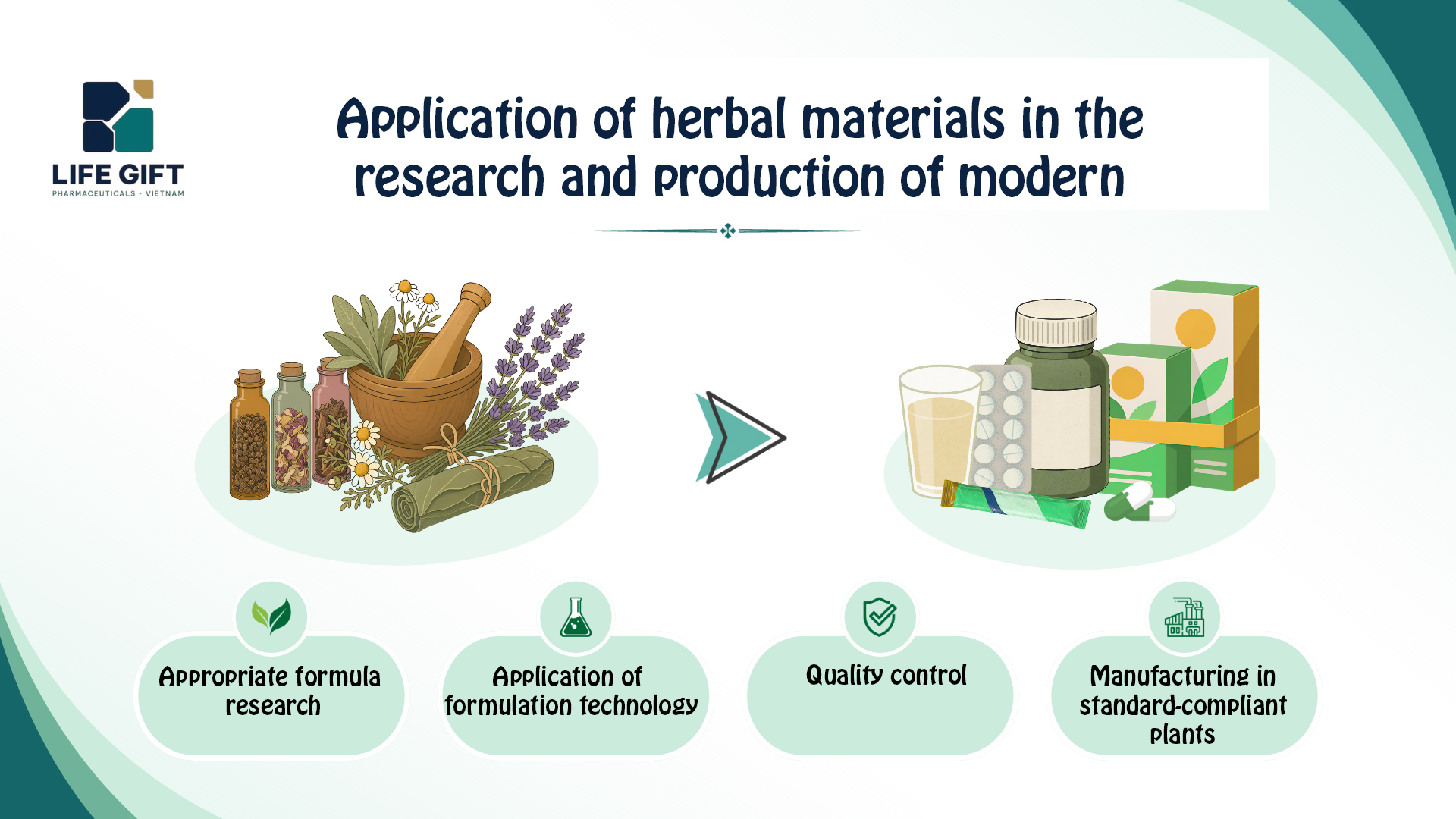
From experience with traditional herbal medicine to the need to develop modern products
The knowledge of medicinal plants accumulated over many generations serves as a valuable resource for research and the development of health care products. Common medicinal herbs such as turmeric, ginger, Polygonum cuspidatum, Solanum nigrum, and artichoke are not only used in daily life but are also the subject of ongoing research into their chemical composition and biological properties.
However, traditional methods such as decoctions or powdered extracts still have limitations in terms of convenience, taste, and quality control. In addition, the quality of medicinal herbs can vary depending on their origin, harvesting conditions, processing, and storage. This necessitates the selection of raw materials that meet clear standards and the application of appropriate production methods.
With the advancement of modern pharmaceutical technology, herbal ingredients can be formulated into various product forms, such as powders, granules, hard capsules, or tablets. These product forms make usage and storage more convenient, while also facilitating the administration of appropriate doses. In addition, production processes that are controlled in accordance with appropriate standards help maintain the consistency and stability of the final product.
The Use of Medicinal Ingredients in Modern Functional Food Formulations
In the research and development of functional food formulations derived from medicinal herbs, selecting the appropriate raw materials is one of the key factors determining product quality. In addition to the origin and characteristics of the medicinal herbs, companies must also consider the form of the raw materials, quality standards, and their suitability for production.
Currently, many herbal ingredients are supplied in the form of extracts or freeze-dried powders, which makes it easier to quantify and combine the components. These raw materials may be supplied along with quality standards, test reports, and related technical documentation, providing a basis for evaluating and selecting raw materials suitable for the product formulation.
However, not all types of extracts have the same quality or characteristics. Depending on the raw material, the parameters to be evaluated may include sensory characteristics, moisture content, microbiological limits, heavy metals, and the content of specific components. Selecting raw materials that meet appropriate quality requirements will help improve formula control and maintain consistency across production batches.
Combining traditional values with formula research and pharmaceutical technology
To develop a functional food product from medicinal herbs, selecting the raw materials is only the first step. The research and development department must also develop a formula, determine the concentrations of the ingredients, and select a product form that meets consumer needs.
Each type of herbal ingredient has its own unique characteristics in terms of taste, solubility, and stability. Therefore, the formulation process must take into account how to combine the ingredients to create a product that not only meets quality standards but is also convenient for consumers.
For example, for concentrated extracts with a bitter taste or distinctive odor, hard capsules may be a suitable option to minimize the perception of taste and odor during use. Meanwhile, powdered or granulated products intended for oral suspension require further research regarding sensory characteristics, solubility, and dispersibility in water.
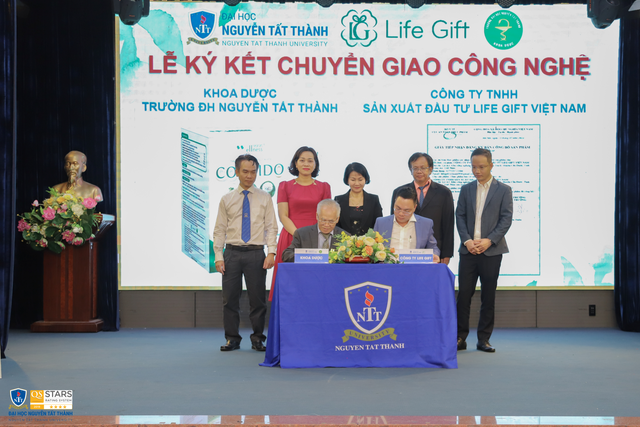
Comtido instant tea is a practical example of the application of modern pharmaceutical technology in the development of herbal products. The product was researched by the Department of Pharmacy at Nguyen Tat Thanh University, and the production technology was transferred to Life Gift through a collaboration between the two organizations. Combining five herbal ingredients—honeysuckle, horse chestnut, dandelion, smilax, and rehmannia—Comtido uses dried herbal extracts to formulate a granule product for instant preparation. The product can be mixed with both hot and cold water, offering convenience to users by eliminating the need for traditional decoction methods.
In addition to powders and granules, modern formulation technology also enables the development of many other forms of functional food products, such as hard capsules, tablets, and film-coated tablets. Each product form has its own advantages in terms of usage, ability to mask taste and odor, packaging, and storage.
Selecting the appropriate dosage form not only helps maximize the potential of medicinal ingredients but also enables companies to develop products that meet the needs and usage habits of today’s consumers.
Quality Control in the Development of Functional Foods from Medicinal Herbs
In addition to selecting raw materials that meet the required standards, quality control during the manufacturing process of dietary supplements is a key factor in producing safe, stable, and consistently high-quality products.
After formulating the product, it must be evaluated based on criteria appropriate for each dosage form, such as sensory characteristics, uniformity, moisture content, disintegration or dissolution, microbiological limits, and relevant food safety requirements.
In particular, products derived from medicinal herbs may experience issues such as changes in color, taste, or odor, moisture absorption, or quality degradation during storage. Therefore, stability studies play a crucial role in selecting packaging, determining storage conditions, and establishing shelf life based on appropriate data.
In addition, the implementation of controlled manufacturing processes, combined with quality control at appropriate stages, helps minimize deviations and maintain consistency across batches of finished products. This is also one of the advantages of developing products from medicinal herbs on a modern production line.
From Herbal Concepts to Functional Food Manufacturing at Life Gift
With Vietnam’s abundant supply of medicinal herbs and the advancement of modern pharmaceutical technology, businesses have many opportunities to develop functional food products that bring unique value to their brands. Product ideas may stem from a familiar medicinal herb, a reference formula, or knowledge inherited from traditional medicine. However, to turn these ideas into actual products, businesses need appropriate solutions regarding raw materials, formulas, dosage forms, and production conditions.
At Life Gift, we partner with our clients throughout the process of researching, formulating, and manufacturing dietary supplements derived from medicinal herbs. Depending on the product’s objectives, our research and development team will evaluate the characteristics of the raw materials, select the appropriate dosage form, and assess feasibility before proceeding with production.
The product development process is guided by quality requirements, the capacity of the production line, and applicable regulations. Through this process, Life Gift aims to help businesses bring their product ideas based on medicinal herbs to life, meet market demand, and advance their brand development strategies.
Contact Life Gift to discuss product ideas and explore solutions for formula development and the manufacturing of functional foods made from medicinal herbs tailored to your business’s needs.
Thuy Vy
Related Posts